
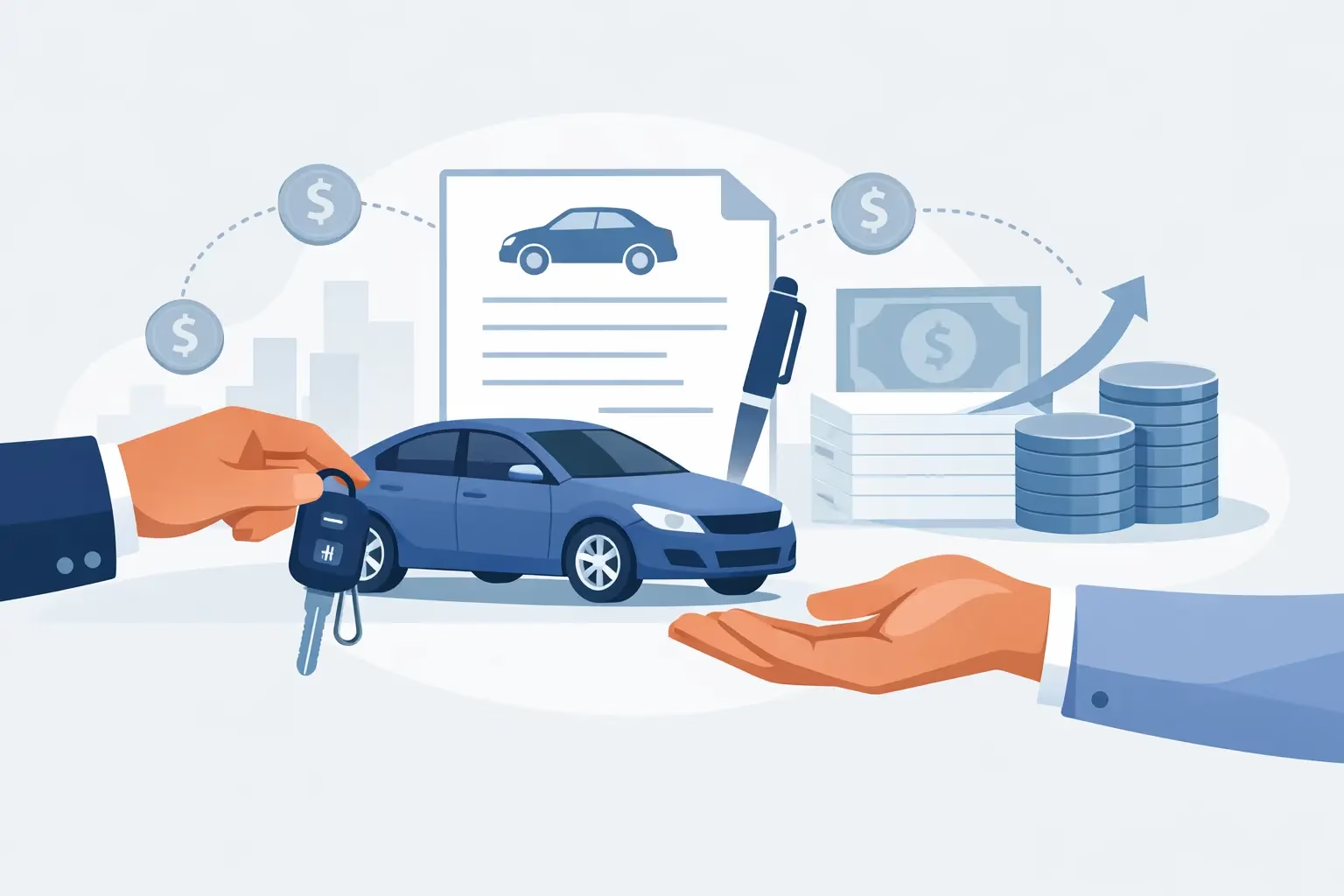
If you’re asking, can I sell a car with payments left, the short answer is yes. The catch is that your lender still has a financial interest in the vehicle, so the sale has to be handled the right way. That sounds more complicated than it needs to be, but for most sellers, it comes down to knowing your payoff amount, understanding your car’s value, and choosing a buyer that can work with an active loan.
This is one of the most common situations people run into when selling a car. Maybe your monthly payment is too high, maybe you need something bigger or more fuel-efficient, or maybe you just want out of the vehicle without spending weeks dealing with private buyers. Whatever the reason, having a loan on the car does not stop you from selling it.
Can I sell a car with payments left if I still owe money?
Yes, you can sell a car before the loan is paid off. What matters is whether the sale price covers the amount you still owe, or whether you’ll need to make up a difference.
Your lender usually holds the title until the loan is satisfied. That means you typically cannot just hand over the title to a private buyer the same day unless the loan is paid off as part of the transaction. This is why the process feels easier when the buyer already knows how to work directly with lenders and liens.
The first number you need is not your monthly payment and not even your remaining balance shown on a recent statement. You need the loan payoff amount. That figure can be slightly higher or lower than the balance because it may include accrued interest or fees up to a specific date.
Once you have that number, compare it to your vehicle’s current market value. That tells you which of these two situations you’re in.
When your car is worth more than the payoff
This is the simpler scenario. If your car can sell for more than the loan payoff, the lender gets paid first and you receive the remaining amount.
For example, if your payoff is $18,200 and your car sells for $21,000, the lender receives $18,200 and you get $2,800, minus any agreed fees if applicable. In this situation, you have positive equity.
Positive equity gives you more flexibility. You can sell to a dealer, a car-buying service, or sometimes a private buyer, depending on how much time and coordination you want to deal with. The main thing is making sure the payoff is sent correctly so the lender can release the title.
When your payoff is higher than the car’s value
This is where sellers get stuck. If you owe more than the car is worth, you have negative equity. You can still sell the car, but the shortfall has to be paid somehow.
Say your payoff is $24,000, but your car is only worth $21,500. That leaves a $2,500 gap. In most cases, you must pay that amount to the lender or buyer handling the transaction so the loan can be closed and the title can be released.
This is common with newer loans, long loan terms, high interest rates, or vehicles that depreciate quickly. It does not mean you are out of options. It just means the sale has to be structured carefully. Some people use savings to cover the difference. Others wait a little longer and keep making payments until the gap is smaller. The right move depends on your timeline, your budget, and how badly you want to exit the vehicle now.
How to sell a car with payments left
The process is usually straightforward when you break it into a few clear steps.
1. Ask your lender for the payoff amount
Request a 10-day or similar payoff quote. This gives you the exact amount required to satisfy the loan within a set timeframe. Ask where the payoff must be sent and how title release is handled.
Also confirm whether your lender holds a physical title, an electronic title, or requires extra forms. Small details like this can affect timing.
2. Find out what your car is actually worth
Do not guess based on what you originally paid or what you still owe. Those numbers do not determine today’s value. Condition, mileage, trim, accident history, market demand, and local inventory all matter.
A real offer from a serious buyer is more useful than a rough estimate. It tells you what you can actually expect now, not what the car might sell for after weeks of listings, messages, and no-shows.
3. Compare the offer to your payoff
This is the decision point. If the offer is above payoff, great – you can move ahead and collect the difference. If it is below payoff, decide whether you want to pay the gap, wait, or explore a trade-in if you are replacing the vehicle.
4. Let the loan get paid off correctly
If the buyer is experienced, they can usually work directly with your lender to handle the lien payoff. That removes a lot of stress. Instead of you trying to coordinate payment, title release, and buyer trust on your own, the transaction is built around closing the loan properly.
5. Complete the paperwork and hand off the vehicle
Once the payoff and sale documents are handled, you sign the required paperwork, remove personal items, and arrange pickup or drop-off. At that point, the process starts to feel like what it should be – simple.
Selling privately vs. selling to a car-buying service
If you still have a loan, private-party selling can get awkward fast. A buyer may hesitate if you do not have the title in hand. They may not understand how a lien payoff works. They may also expect you to solve the paperwork before they commit.
That does not make private selling impossible. It just means more coordination, more waiting, and more room for delays. If your lender is local and willing to meet with both parties, that can help. But many sellers would rather avoid arranging test drives, explaining lien details to strangers, and chasing payment while a lender still controls the title.
This is where a professional buyer has an advantage. Companies that buy cars every day already know how to verify payoff amounts, send funds, and manage title release. If speed matters, that experience can save days or even weeks.
For busy sellers, that trade-off is usually worth it. You may not be trying to squeeze every possible dollar out of the car. You may just want a fair offer, a clear process, and payment without the usual hassle. That is exactly why services like Consumer Auto Xchange appeal to owners who still have loans on their vehicles.
What documents do you usually need?
The exact paperwork varies by state and lender, but most sellers should expect to provide a valid ID, current registration, loan account information, payoff details, and the vehicle itself in the condition described. If there are two names on the loan or registration, both owners may need to sign.
If you have service records, extra keys, and payoff instructions from your lender, keep those ready too. Being organized helps the sale move faster, especially when timing matters.
Common mistakes to avoid
The biggest mistake is assuming the loan balance on your last statement is the same as the payoff. It often is not.
Another common problem is agreeing to sell before you understand your equity position. If you owe more than the car is worth and do not have a plan for the gap, the deal can stall.
Sellers also get tripped up when they pursue a private sale without understanding title timing. If the buyer expects immediate title transfer and your lender needs several business days after payoff, that can create trust issues and delays.
Finally, do not forget practical details after the sale. Cancel or transfer insurance once the sale is complete, remove toll tags, clear personal data from the infotainment system, and check your state requirements for plates and notices of sale.
The answer depends on who handles the sale
So, can I sell a car with payments left? Absolutely. The real question is how much work you want the process to become.
If you have plenty of time, strong equity, and patience for back-and-forth with buyers, a private sale may still be an option. If you want speed, less stress, and a buyer who knows how to deal with active loans, it makes sense to choose a company that can handle the payoff and paperwork for you.
A car loan should not trap you in a vehicle that no longer fits your life. When the process is handled properly, selling with payments left can be a lot easier than most people expect.

