
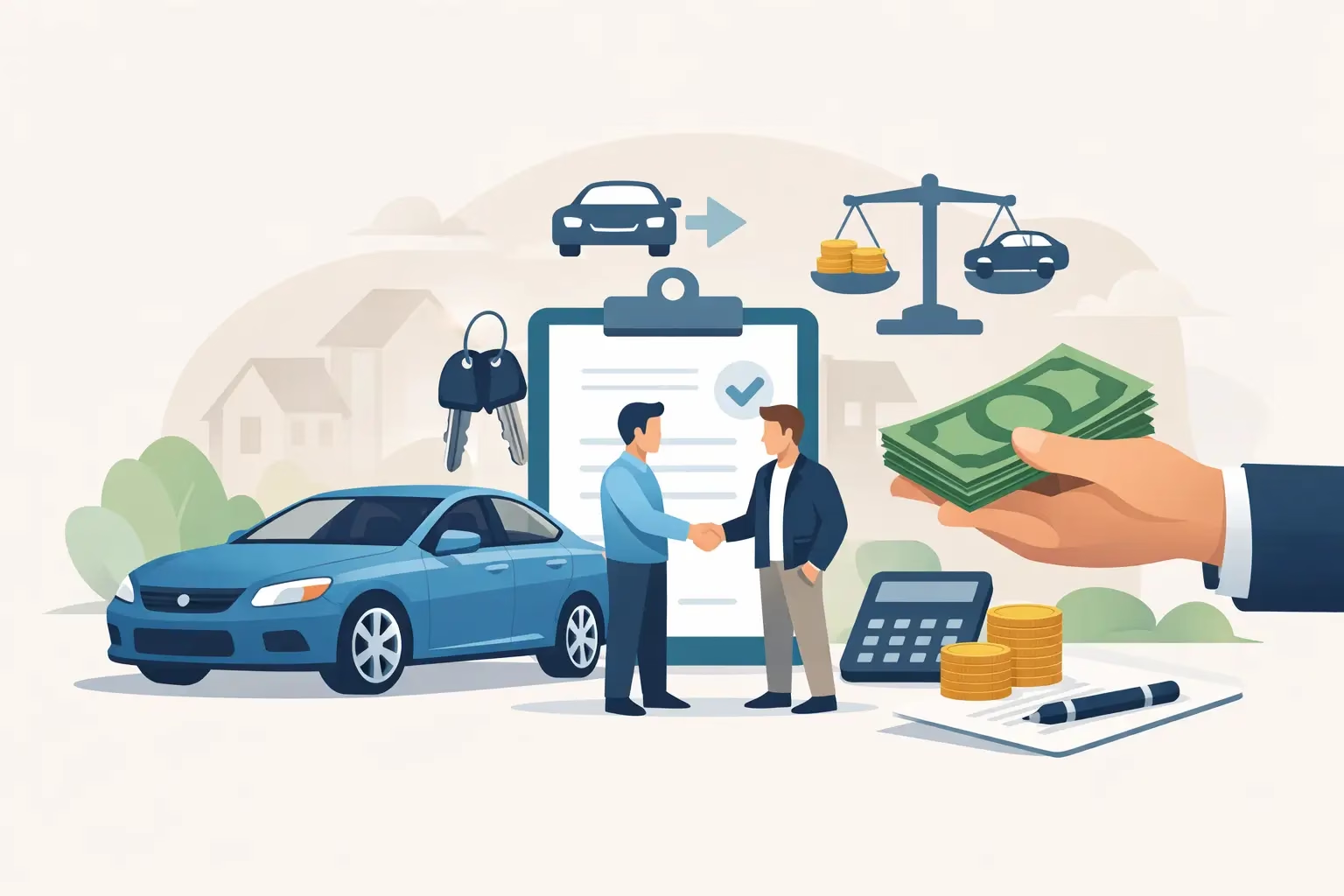
If you’re asking, can I sell financed car paperwork and all, the short answer is yes. You can sell a car that still has a loan on it. The part that trips people up is not whether it’s allowed – it’s how the lender gets paid, how the title is released, and what happens if your car is worth less than what you still owe.
That’s where many sellers get stuck. They want to move on from the car, but the loan makes the process feel complicated. The good news is that financed cars get sold every day. Once you understand the payoff amount, your equity position, and the handoff process, it becomes much more manageable.
Can I sell a financed car if I still owe money?
Yes. A financed car can be sold before the loan is paid off. What matters is that the lender’s balance gets satisfied as part of the sale.
When a vehicle is financed, the lender usually holds a lien on the title. That lien gives the lender a legal interest in the car until the loan is paid in full. So while you can absolutely sell the vehicle, you typically cannot transfer clear ownership to a new buyer until the lien is resolved.
This is why selling a financed car is more involved than selling a car you own outright. There is an extra party in the transaction, and that party wants its money first. Still, this is a routine process, especially when you work with a buyer that knows how to handle loan payoffs and title coordination.
What you need before you sell
Before you do anything else, contact your lender and ask for the current payoff amount. This is not always the same as your remaining loan balance. The payoff amount may include accrued interest, fees, or a specific payoff window that changes after a certain date.
You should also ask your lender how they handle title release. Some lenders can send title documents electronically. Others mail the title after payment clears. Some states use electronic titles, while others rely on paper titles. Knowing this up front helps you avoid delays.
At the same time, get a realistic value for your car. This tells you whether you have positive equity, negative equity, or are roughly breaking even.
Positive equity means the car is worth more than your payoff amount. If your car is worth $22,000 and your payoff is $18,000, the extra $4,000 is your equity.
Negative equity means you owe more than the car is worth. If your payoff is $24,000 and your car is worth $20,000, you’ll need to cover the $4,000 difference somehow in order to complete the sale.
That one number comparison shapes the whole deal.
How to sell a financed car without creating problems
The cleanest path is usually to sell to a professional car buyer that can manage the payoff directly. In that setup, the buyer verifies the loan details, pays the lender, and handles the steps needed to transfer ownership properly. If there’s money left over after the payoff, you get the difference. If there’s a shortfall, you pay that amount to close the gap.
This matters because private-party sales can get awkward fast when a lien is involved. A private buyer may hesitate to hand over money without a title. You may not have the title because the lender still holds it. Then both sides end up trying to coordinate payment, lien release, and delivery on different timelines.
It can work, but it often takes more effort, more phone calls, and more trust than most people want to deal with.
Selling to a dealership is another option, especially if you’re trading in. The trade-in credit can offset what you owe, and the dealer usually handles the payoff. The trade-off is that convenience may come with a lower offer than other selling routes.
For many busy sellers, the best option is the one that removes the most friction. A service built around speed can often give you a firm offer, pay off the lender, and arrange pickup without making you chase paperwork on your own.
Can I sell a financed car with negative equity?
Yes, but negative equity changes the math.
If your offer is lower than your payoff amount, the lender still expects the full balance to be paid. That means you need a plan for the difference. Some sellers pay the gap from savings. Others roll negative equity into another vehicle purchase, though that can make the next loan more expensive over time.
This is where it pays to be realistic. If you are upside down on the loan, waiting may help if you can keep making payments and reduce the balance. But waiting only makes sense if the car’s value is not dropping faster than the loan balance. Some vehicles hold value well. Others do not.
If you need to sell now because of a move, a job change, a second vehicle you no longer need, or simply a monthly payment you want gone, then the goal shifts from perfect timing to a clean exit. Paying a small shortfall now may be worth it if it removes a larger ongoing expense.
The paperwork side of selling a financed car
This is the part sellers often worry about most, but it’s usually straightforward once the process starts.
You’ll generally need your vehicle details, registration, photo ID, loan account information, and payoff statement. Depending on the state and buyer, you may also need an odometer disclosure, a power of attorney form, and lender authorization documents.
If your lender has the title, the buyer and lender coordinate the release once the payoff is made. If your state uses electronic lien and title systems, the transfer may happen digitally. If it uses paper titles, documents may need to be mailed and signed.
None of this is unusual. It just means timing matters. If you’re selling on your own, you are responsible for making sure every piece lines up. If you sell to an experienced buyer, much of that coordination is handled for you.
That difference can save days of back-and-forth.
Why private sales are harder when there’s a loan
A private sale might bring a higher price, but a financed car makes that route more complicated.
Most private buyers want a simple exchange: they pay, you sign over the title, and the car is theirs. With a financed car, you may not be able to produce the title at the time of sale. That creates hesitation, especially if the buyer has never dealt with a lien payoff before.
There are ways to structure it safely, such as meeting at the lender’s branch or using escrow-style processes, but that adds logistics. You may also spend time answering questions from buyers who disappear once they hear there’s a loan involved.
That doesn’t mean private sale is wrong. It just means the extra effort is real. If your priority is top dollar and you have time, it may be worth exploring. If your priority is speed, simplicity, and certainty, a direct car buyer is usually the better fit.
A faster option for financed vehicles
If you want to avoid weeks of listings, random messages, and title confusion, selling to a buyer that handles liens can make the process much easier. Consumer Auto Xchange is built for exactly that kind of seller – someone who wants a fast offer, a clear process, and payment before pickup.
Instead of trying to explain your loan situation to strangers, you submit your vehicle details, review your offer, and let the payoff process be handled correctly. That means less stress, fewer moving parts, and a faster path to getting the car sold.
For people balancing work, family, and everything else, that convenience is not a small detail. It is the difference between a sale that drags on and one that gets done.
Common mistakes to avoid
The biggest mistake is guessing at what you owe. Always get the official payoff amount from your lender. A rough balance from your monthly statement is not enough.
Another mistake is assuming every buyer can handle a financed car. Some can. Some cannot. Ask early how lien payoff and title transfer will work so you know what to expect.
It also helps to avoid over-focusing on sticker price alone. A slightly lower offer with a fast, reliable payoff process can be the better deal when you factor in time, safety, paperwork, and the risk of a private sale falling apart.
And if you have negative equity, do not ignore it and hope it solves itself. Know your number, decide what you can cover, and choose the path that fits your timeline.
Selling a financed car is absolutely possible. The best next step is simply getting your payoff amount, checking your car’s value, and choosing the option that gets you paid with the least hassle.

