
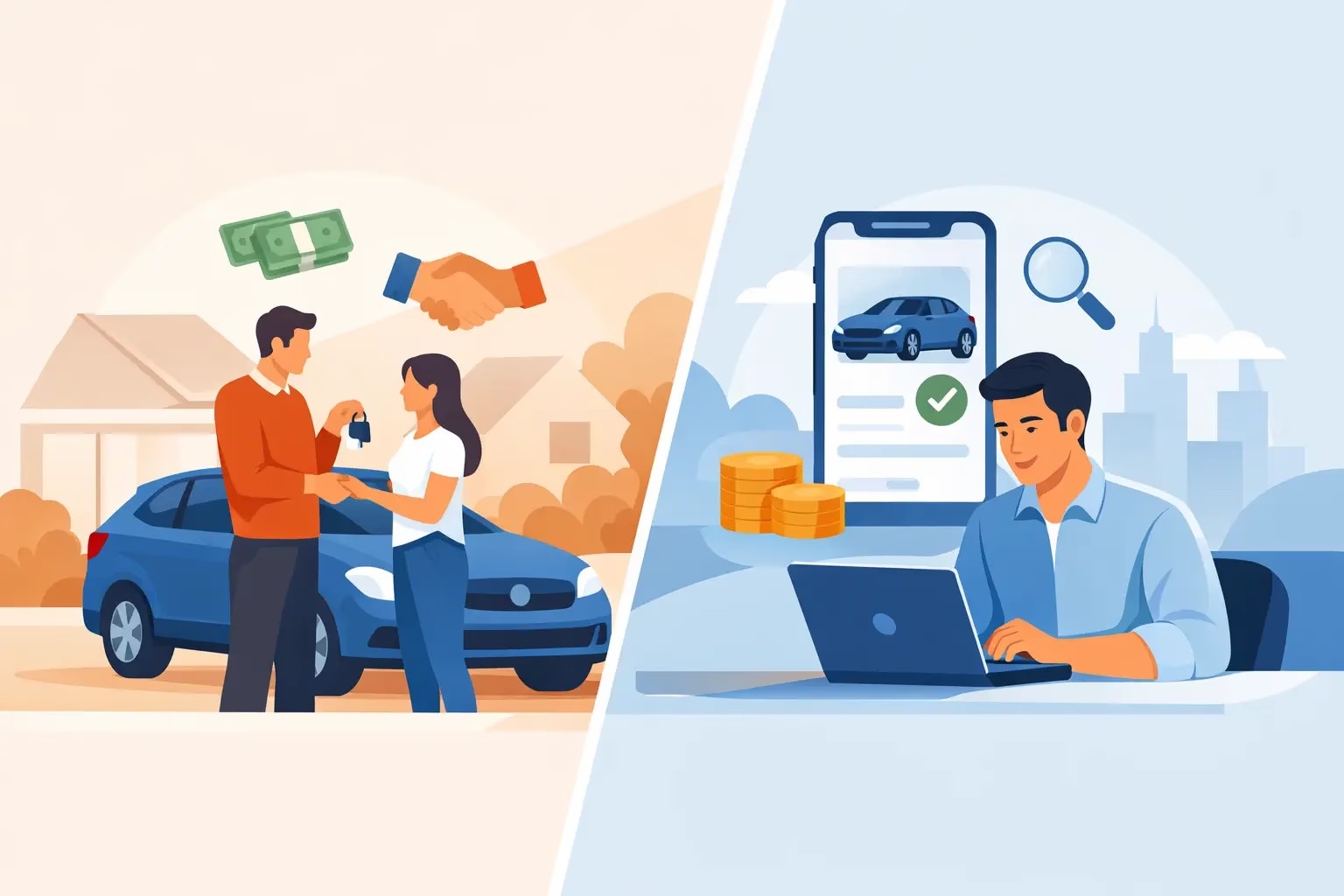
If you need to sell your car this week, the question is not just what you could get for it. It is whether a private party sale versus online offer makes more sense for your schedule, your stress level, and your confidence in the deal. For some sellers, waiting it out for a higher number is worth it. For many others, speed, safety, and certainty matter more.
That difference is where most car-selling frustration starts. A private sale can look better on paper because the asking price is often higher. But asking price and actual payout are rarely the same thing once you factor in time, negotiations, no-shows, repairs, loan payoff issues, and the simple reality of trying to coordinate with strangers.
Private party sale versus online offer: what changes?
The biggest difference is how much work falls on you.
With a private party sale, you are the marketer, the scheduler, the negotiator, and the risk manager. You take photos, write the listing, answer messages, filter out spam, set up meetings, allow test drives, and work through payment details. If your vehicle still has a loan, the process can get even more complicated.
With an online offer, the process is built to remove those steps. You submit your vehicle details, receive an offer, and if you accept, the sale moves forward on a defined timeline. That does not just save time. It cuts out uncertainty.
For busy adults, that difference matters more than it used to. Selling a car privately might be manageable if you have flexible hours and patience. It feels very different if you are balancing work, kids, errands, and a car you need gone quickly.
The price question everybody asks
Let us address the obvious point first. In some cases, a private party sale can bring in more money than an online offer.
That is the upside. The trade-off is that private-party pricing is rarely as simple as posting a number and getting it. Buyers negotiate. They compare your car to every similar listing in your area. They point out cosmetic flaws. They ask for maintenance records. They expect you to move on price, and many will try to move a lot.
Then there is the cost of delay. If your car sits for two or three weeks, you may still be making payments, carrying insurance, or watching the market soften. If it needs tires, brakes, detailing, or a minor repair to attract stronger buyers, that higher sale price starts shrinking fast.
An online offer is usually not about squeezing out the last possible dollar. It is about getting a real number now, avoiding the back-and-forth, and knowing what your next step is. For many sellers, that predictability has value.
A good way to think about it is simple: private sales may offer a higher ceiling, but online offers often provide a stronger real-world outcome once you count your time, effort, and risk.
Time is where private sales get expensive
Most people underestimate how long a private sale can take.
First, you need to create a listing that stands out. Then you wait for responses, many of which will not lead anywhere. Serious buyers ask questions. Some want extra photos. Some want a vehicle history report. Some schedule a meeting and never show up. Others drive the car, say they need to think about it, and disappear.
Even when you find a real buyer, the deal can stall over financing, inspection concerns, title paperwork, or simple indecision.
By contrast, an online offer is designed around speed. You get pricing quickly, and if you move forward, the process stays focused. That speed is not just convenient. It can be the difference between solving a problem today and dragging it into next week.
If you already bought another vehicle, are moving, or just want to stop paying for a car you no longer need, time is not a side issue. It is the issue.
Safety and comfort matter more than people admit
A lot of sellers start with a private listing and only later realize how uncomfortable it can be.
You are sharing contact information, setting up meetings, and inviting strangers to inspect your vehicle. You may need to meet in a parking lot, answer personal questions, or hand over keys for a test drive. Even if everything goes fine, it can still feel like a hassle. If it does not go fine, the stress goes up fast.
An online offer gives you a more controlled process. There is no need to manage a parade of unknown buyers or wonder whether someone is serious. That lower-stress experience is a major reason many sellers choose a direct buyer model in the first place.
This is especially true for people selling on a tight schedule or handling the sale on their own. Convenience is one thing. Peace of mind is another.
Loan payoff, title issues, and the details people forget
A private sale is more complicated when the car is not fully paid off.
If you still owe money, the buyer may hesitate because the title is tied up with the lender. Then you have to explain payoff amounts, timing, and how ownership will transfer. None of that is impossible, but it does create friction. The more friction, the more likely a buyer walks away and moves on to another listing.
This is one area where an online offer can make a big difference. Companies built for this process often handle lien and loan situations routinely, which removes a major obstacle for sellers. That matters if you want a clean transaction instead of a crash course in title logistics.
The same goes for paperwork in general. Private buyers often want reassurance on every detail, which means more messages, more documentation, and more waiting. A streamlined online sale keeps the transaction moving.
When a private sale makes sense
There are cases where selling privately is still the right move.
If your car is highly desirable, in excellent condition, and priced well for your local market, you may attract strong interest quickly. If you have time to screen buyers, meet safely, and negotiate, you could end up ahead financially. Sellers who know the market and do not mind the work can make that route pay off.
A private sale may also make sense if your main goal is maximizing price and you are not under any deadline. If the car can sit for a while and you are comfortable managing the process, the extra effort may be worth it.
That said, even in the best-case scenario, private selling is rarely the easier option. It only makes sense if the additional return clearly outweighs the extra time and hassle.
When an online offer is the better fit
An online offer is usually the better fit when speed, simplicity, and certainty matter most.
If you need to sell fast, do not want to deal with listings, or simply want a clear number without the usual runaround, this route tends to be the better answer. It is also a strong option if your vehicle has a loan balance, if your schedule is packed, or if you want to avoid meeting strangers and handling endless messages.
For many sellers, the real benefit is momentum. You are not wondering when the car will sell. You are not adjusting prices every few days. You are not hoping the next buyer will actually show up.
You get a path forward.
That is why services like Consumer Auto Xchange appeal to everyday car owners who want a straightforward process – share the vehicle details, get an offer, get paid before pickup, and move on without the usual friction.
How to decide without overthinking it
Ask yourself two questions.
First, how quickly do you need the car gone? Second, how much effort are you honestly willing to put into the sale?
If you need top-dollar and have the time, patience, and comfort level to manage the process, a private sale could be worth trying. If you want speed, less stress, and a more predictable transaction, an online offer is often the smarter choice.
There is no universal winner in a private party sale versus online offer comparison. The right option depends on what you value more: the possibility of a higher price or the certainty of an easier sale.
Most sellers are not just selling a car. They are trying to clear space, free up cash, end a payment, or simplify a busy week. When that is the real goal, the best option is usually the one that gets the job done cleanly and quickly.

