
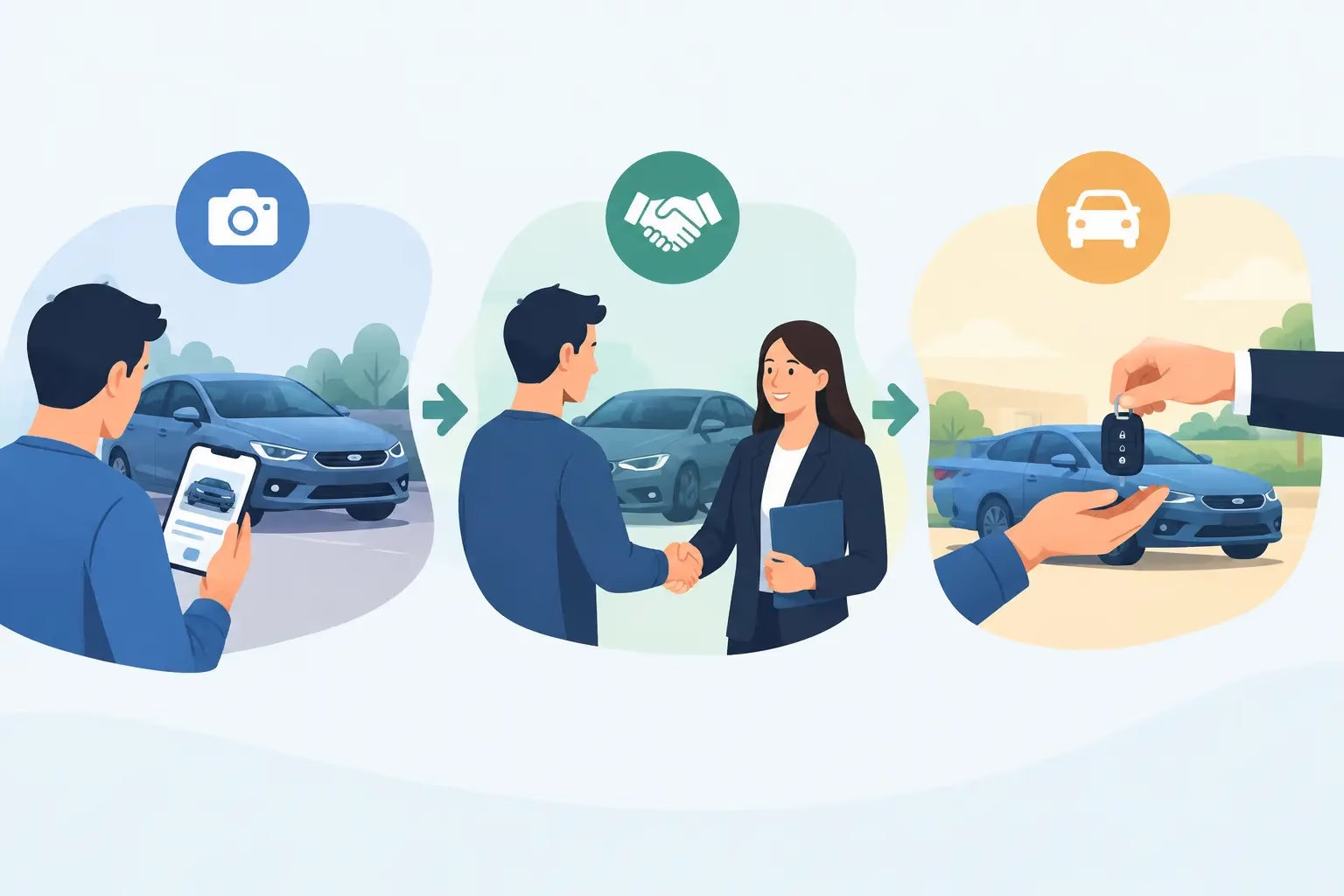
A car sale can eat up far more time than most owners expect. You take photos, write a listing, answer messages that go nowhere, schedule test drives, and hope the person holding cash actually shows up. A three step car selling process gives you a faster, more controlled way to move on from your vehicle without turning your week into a part-time job.
For busy drivers, the best sale is not necessarily the one that requires the most phone calls or the longest wait. It is the one that gives you a clear offer, a secure payment plan, and a pickup schedule you can count on. Here is how a simple process can replace the usual stress of selling a car.
Why a three step car selling process makes sense
Private-party selling can work if you have time, patience, and a vehicle that attracts strong local demand. But it also puts the work on you. You handle the listing, respond to low-ball offers, meet strangers, negotiate price, and sort out payment. If your car has a loan attached, there is another layer of paperwork and coordination.
A dealership trade-in is often easier, but the offer may be folded into a larger negotiation for your next vehicle. That can make it harder to see exactly what you are receiving for the car you are selling.
A direct online sale is designed for owners who want a straightforward answer. Instead of managing every moving part yourself, you provide the vehicle details, review a cash offer, and arrange pickup after payment is handled. The process stays focused on what matters: selling your car quickly and with less uncertainty.
Step 1: Share your vehicle details
The first step is simple: tell us about your car. Basic information such as the year, make, model, trim, mileage, VIN, condition, and location helps determine its value. You may also be asked about features, accident history, warning lights, title status, and whether the vehicle is financed.
Accuracy matters here. It is tempting to describe a car in its best possible light, but a clear, honest description helps produce an offer that matches the vehicle when it is picked up. Normal wear is normal. Scratches, worn tires, mechanical issues, or a cracked windshield do not automatically stop a sale. They simply need to be part of the picture from the start.
This step should take minutes, not days. You should not have to wash, detail, photograph, and market your car just to find out whether someone is interested. With Consumer Auto Xchange, vehicle information is reviewed through a nationwide network of more than 8,000 dealers, helping generate a competitive offer without requiring you to negotiate with multiple buyers.
Have the basics ready
A little preparation can help the first step go even faster. Keep your driver’s license, vehicle title or registration, payoff information if you have a loan, and both sets of keys nearby. If you are unsure whether you have a lien, your lender can confirm the payoff amount and the steps needed to release the title.
You do not need to solve every paperwork question before requesting an offer. A good car-buying service can guide you through the details, including situations involving financed vehicles and liens.
Step 2: Review your cash offer
Once your details are submitted, the next step is receiving an offer. This is where the process becomes much different from listing your vehicle online. Rather than waiting for buyers to decide whether they want to make an offer, you receive a clear number to consider.
A cash offer gives you a decision point. You can compare it with the time, cost, and risk involved in selling privately. Think about more than the highest number you might possibly get after several weeks of effort. Consider the value of avoiding no-shows, unsafe meetups, repeated price negotiations, repair requests, and payment concerns.
The right offer depends on your priorities. A private sale may sometimes bring a higher price, particularly for a desirable, well-maintained vehicle and a seller willing to wait. But that higher potential price is not guaranteed, and it usually comes with more work. If you need to sell quickly, are relocating, replacing a vehicle, handling an estate, or simply do not want strangers coming to your home, certainty can be worth more than chasing an uncertain top-dollar sale.
Review the offer carefully and ask questions when needed. Confirm that it reflects the details you provided and understand what documents are required. A legitimate process should be clear about the next steps, with no pressure to accept before you are ready.
What about a loan or lien?
Owing money on a vehicle does not mean you cannot sell it. It means the payoff needs to be coordinated correctly. The lender holds an interest in the car until the loan is paid, so the title cannot simply be transferred as if the vehicle were owned free and clear.
The payoff amount may be different from the balance shown on your last statement because interest can accrue daily. Providing current lender information allows the payoff process to be handled correctly. If your offer is higher than the amount owed, the remaining equity belongs to you. If you owe more than the offer amount, you may need to cover the difference before the sale can be completed.
Step 3: Get paid before pickup
The final step is where convenience becomes real. After you accept the offer and complete the required paperwork, payment is arranged before pickup. You are not left handing over your keys and hoping the money arrives later.
This matters because payment is one of the biggest concerns in a private sale. A buyer may show up with a check, request a wire transfer, or suggest a payment app. Even when the buyer is legitimate, you still have to verify funds and decide when it is safe to release the vehicle. A structured sale removes much of that uncertainty.
Once payment is confirmed, pickup can be scheduled around your availability. In many cases, the process can move from agreement to pickup and payment within 48 hours, although timing can depend on title status, loan payoff requirements, location, and document readiness. You do not need to coordinate a test drive, find a safe meeting location, or make time for several potential buyers.
Before pickup, remove personal belongings from the glove box, console, trunk, and under-seat storage. Take out toll tags, parking passes, garage remotes, and personal documents. If you are keeping a license plate under your state’s rules, make sure you understand the removal and return requirements. A quick final check helps you leave the sale with everything you need.
When this process is the better choice
A three-step sale is especially useful when time and predictability matter. Maybe your new vehicle is arriving soon, your family needs to reduce the number of cars, or an unexpected repair has made you decide it is time to sell. It also makes sense for sellers who do not want to explain a vehicle’s condition to dozens of people or negotiate in a driveway.
It is not the only path for every car owner. If you enjoy selling privately, have plenty of time, and are confident managing the transaction, you may prefer that route. But if your goal is a fast, safe sale with fewer moving parts, the trade-off is clear: less effort, less waiting, and a defined payment process.
Your car sale should fit your schedule, not take it over. Start with accurate vehicle details, review the offer on your terms, and choose a pickup plan that lets you hand over the keys with confidence.

