
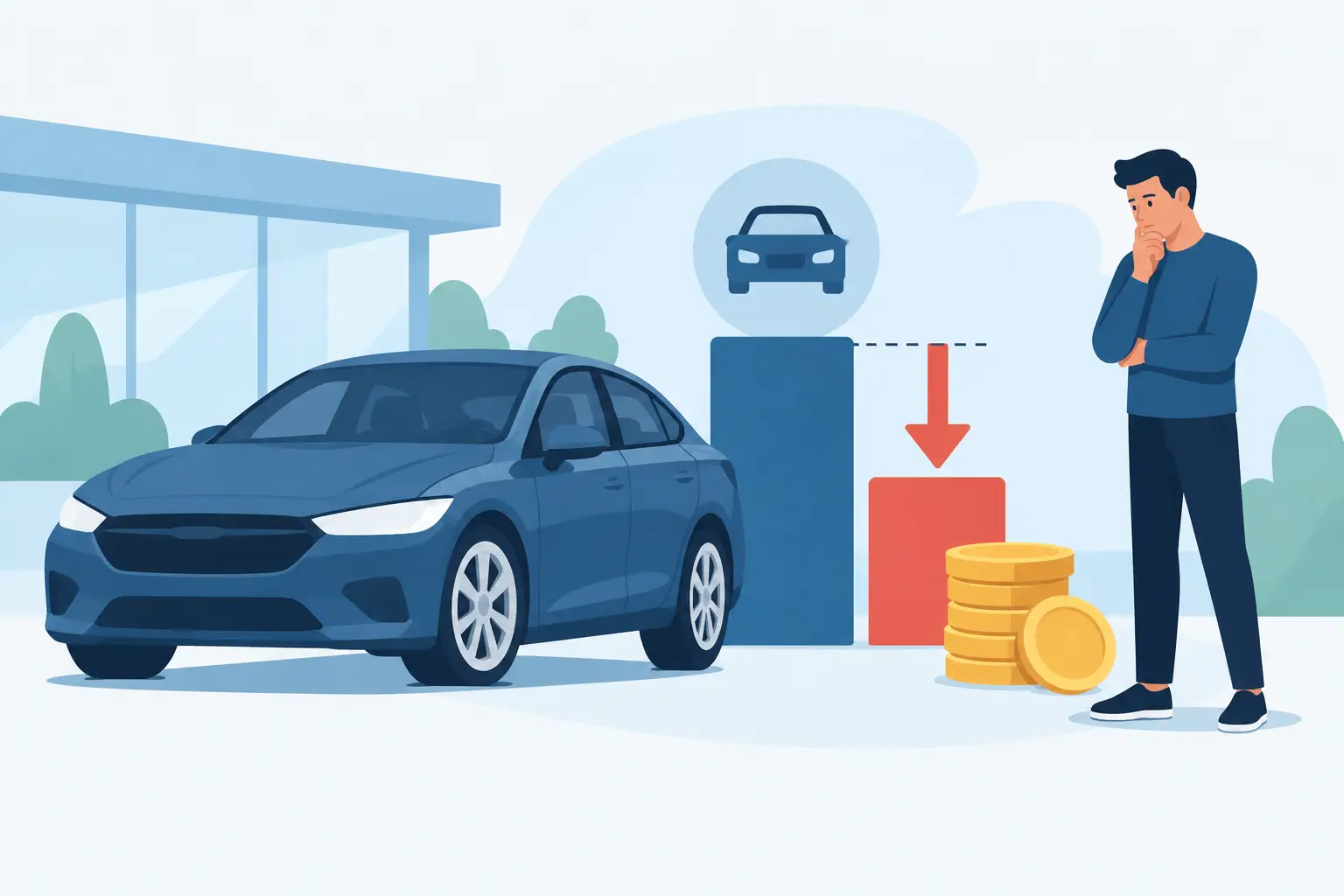
Your car is worth $18,000, but your lender says you still owe $22,500. That $4,500 gap is negative equity, and it does not disappear when you sell. This car sale with negative equity example shows exactly where the money goes, what you may need to pay, and how to avoid a surprise at pickup.
Selling a car with a loan is common. Selling one for less than its payoff amount is common, too. The key is knowing your numbers before you accept an offer or hand over the keys.
What Negative Equity Means When You Sell a Car
Negative equity means your loan payoff is higher than your vehicle’s current market value. It is also called being upside down on a loan.
The basic math is simple:
Loan payoff amount – sale price = negative equity
Your payoff amount is the amount your lender requires to release its lien on the vehicle. It may be slightly different from the balance shown in your monthly account because interest continues to accrue and some lenders include a per-day payoff amount.
The sale price is what a buyer is willing to pay for the vehicle based on its condition, mileage, history, trim, local demand, and current market conditions. It is not necessarily what you paid for the car or what similar listings ask online.
If the sale price covers the payoff, the lender can be paid and any remaining money belongs to you. If it does not, you must cover the difference before the lien can be released.
Car Sale With Negative Equity Example: The Numbers
Here is a straightforward example.
You request a 10-day payoff quote from your lender and learn that the exact amount is $24,200. You receive an offer to sell your vehicle for $19,000.
Your negative equity is:
$24,200 payoff – $19,000 sale price = $5,200 owed
In this situation, the buyer’s $19,000 goes toward the lender payoff. You would need to provide the remaining $5,200 so the loan can be paid in full and the lender can release its lien. Once that happens, ownership can transfer cleanly.
You do not receive $19,000 and then keep making payments on the old loan. The loan must be settled because the lender has a legal interest in the vehicle. A legitimate buyer will need clear title or a clear path to getting it before completing the transaction.
A second example with positive equity
Now change one number. Your payoff is still $24,200, but the vehicle sells for $26,000.
$26,000 sale price – $24,200 payoff = $1,800 in equity
The lender receives $24,200, and you receive the remaining $1,800. This is the easier version of a financed-car sale, but the steps are similar: verify the payoff, coordinate with the lender, and complete the title transfer correctly.
Why Your Payoff Can Be Higher Than Expected
Many sellers look at their monthly statement, see a balance, and assume that is the number they need to cover. It is a good starting point, but it may not be the final number.
Interest can add up every day until the loan is paid. Your lender may also have specific instructions for lien releases, payment methods, or processing times. Request a written payoff quote with an expiration date before you make plans around an offer.
Negative equity often happens when a vehicle depreciates faster than the loan is paid down. A small down payment, a long loan term, rolling an old loan balance into a newer vehicle, or adding expensive products to financing can all make the gap larger. None of this means you cannot sell. It means you need a plan for the shortfall.
Your Options When the Offer Is Less Than the Loan Payoff
There is no one right answer. The best option depends on how much you owe, how quickly you need to sell, whether you are replacing the car, and what continuing to own it will cost you.
Pay the difference at sale
If you have the funds available, paying the negative equity directly is usually the cleanest path. The buyer’s payment and your funds cover the loan in full, the lien is released, and you are done with the vehicle and its monthly payment.
This option can make sense when the gap is manageable and you need to sell quickly. It also prevents the balance from being added to another auto loan, where you could pay interest on it for years.
Wait and pay down the loan
If you are not in a hurry, keeping the car and making extra principal payments may reduce the gap. This works best when the vehicle is reliable and its value is not falling faster than you can pay down the balance.
Check your loan agreement before making extra payments. You want the additional amount applied to principal, not simply credited toward future scheduled payments.
Sell privately for more, with more work
A private-party sale may bring a higher price than a direct sale in some cases. But a higher asking price is not the same as a completed sale. You may still need to handle listings, calls, no-shows, test drives, payment safety, lien paperwork, and a buyer who is comfortable waiting for title release.
For a $500 difference, the extra effort may not be worth it. For a much larger difference, it may be worth considering if you have the time and can manage the transaction safely.
Roll the balance into another loan carefully
A dealership may offer to include your negative equity in financing for your next vehicle. This can solve an immediate problem, but it does not erase the debt. It simply moves it.
For example, rolling $5,200 into a new loan means you start the next loan already upside down. If the replacement vehicle also depreciates quickly or you choose a long loan term, the situation can repeat. Review the full purchase agreement, total amount financed, rate, term, and monthly payment before agreeing.
How to Sell a Car With a Lien Without the Runaround
Start by calling your lender and asking for the exact payoff amount, payoff expiration date, and lien-release procedure. Also ask whether the lender accepts direct payment from a vehicle buyer and how long it takes to issue title or release the lien after payment clears.
Then get a real offer based on accurate vehicle details. Be upfront about the loan. Hiding the lien until the end can delay the sale and create unnecessary stress.
A direct car-buying service can simplify this part of the process. Consumer Auto Xchange can help sellers work through loans and liens while avoiding the usual hassle of listings, strangers, and dealership back-and-forth. You still need to cover any negative-equity gap, but you should know the amount before the transaction moves forward.
Before finalizing anything, confirm the numbers in writing. You should understand the offer amount, the lender payoff, your required contribution if any, and how the title transfer will be handled. Keep copies of your payoff confirmation and final loan payment records until the lender confirms the account is closed.
Do Not Forget These Costs and Timing Details
The sale price and payoff amount are the main numbers, but timing matters. A payoff quote can expire, and a loan may accrue additional interest if payment arrives after that date. Ask how a small payoff difference will be handled if processing takes longer than expected.
If you are replacing the vehicle, separate the sale decision from the new financing decision when possible. Knowing what your current car is worth and what you owe gives you a clearer view of the deal. It is easier to spot negative equity when it is not buried inside a monthly payment conversation.
Also, do not cancel insurance until ownership has officially transferred and the lender confirms the loan is paid. If you are selling quickly, arrange your next transportation plan before pickup so a fast sale does not create a new inconvenience.
Negative equity is a number to solve, not a reason to delay every decision. Get your exact payoff, compare it with a firm offer, and choose the path that costs you the least in money, time, and stress.

