
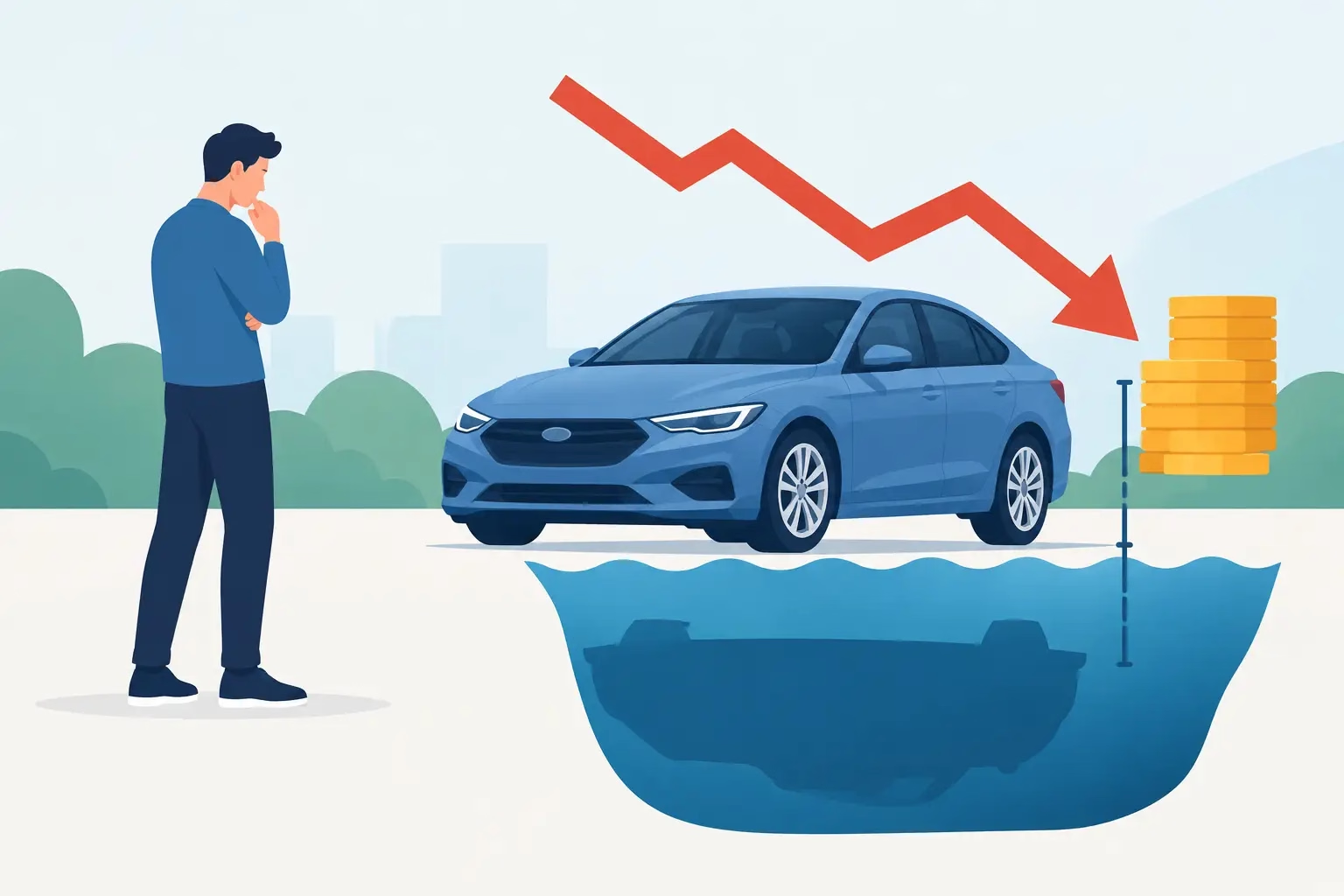
A car can be worth less than the amount left on its loan, even when it runs well and looks great in the driveway. That gap is the negative equity meaning in plain English: you owe more on your vehicle than it is currently worth. It is also called being “upside down” on a car loan.
Negative equity can make selling, trading in, or replacing a vehicle feel more complicated. But it does not mean you are stuck. Once you know the numbers, you can choose the option that best fits your timeline, budget, and next vehicle plans.
What Is the Negative Equity Meaning on a Car Loan?
Negative equity is the difference between your auto loan payoff amount and your vehicle’s current market value when the payoff is higher.
For example, say your lender quotes a payoff of $22,000, but your vehicle receives offers around $18,000. You have $4,000 in negative equity. If you sell the car for $18,000, that money goes toward the loan, and the remaining $4,000 still needs to be paid to satisfy the lender.
The math is simple:
Loan payoff amount – current vehicle value = negative equity
Your payoff is not always the same as the balance shown on last month’s statement. Interest accrues daily, so ask your lender for a current 10-day payoff quote before making decisions. The vehicle value also depends on its condition, mileage, location, title status, accident history, and current market demand.
How Negative Equity Happens
Many drivers end up upside down through normal life circumstances, not because they made a bad decision. New vehicles often lose value quickly in the first few years. A long loan term can make that early depreciation harder to catch up with.
Negative equity may also happen when a buyer makes a small down payment, finances taxes and fees, or rolls a previous loan balance into a new car loan. High interest rates can slow progress too, especially early in the loan when more of each payment goes toward interest.
Unexpected mileage, wear and tear, or a market change can reduce a vehicle’s value. On the other hand, a lender does not reduce what you owe just because resale values have fallen. The loan agreement remains the same.
Why It Matters When You Sell or Trade In
When you own your car outright, selling is straightforward: you receive payment and keep the proceeds. With a loan, the lender has a financial interest in the vehicle until the loan is paid off. With negative equity, a sale must cover both the car’s value and the remaining loan gap.
At a dealership trade-in, the dealer may offer to roll that unpaid balance into your next loan. This can be convenient, but it increases the amount you finance on the next vehicle. You could start the new loan already upside down, with a higher payment or a longer repayment period.
That option is not automatically wrong. It may make sense if you need a reliable replacement immediately and can comfortably manage the new loan. Still, it is worth seeing the figures in writing. Ask for the trade-in value, the exact payoff amount, the negative equity being carried forward, the price of the replacement vehicle, and the total amount financed.
A private sale can sometimes bring more money than a trade-in, but it comes with work: creating listings, answering messages, arranging test drives, handling payment safely, and coordinating the payoff. If a lien is involved, the transaction requires extra care because the title may be held by the lender.
How to Find Out Whether You Have Negative Equity
Start with two numbers: your current payoff and a realistic estimate of what your car can sell for.
Call your lender or check your online account for a 10-day payoff quote. This amount includes the balance plus any daily interest due through the quote period. Then get a current offer or appraisal based on accurate vehicle details. Be honest about condition, mileage, warning lights, damage, modifications, and any title concerns. Accurate information now helps prevent surprises later.
If your payoff is lower than the offer, you have positive equity. If the offer is lower, subtract it from the payoff to find your gap.
Here is a quick example. If your payoff is $15,750 and your vehicle’s confirmed offer is $13,500, you have $2,250 in negative equity. That does not mean the sale cannot happen. It means the lender must receive the full $15,750 before the loan can be closed and the title released.
Your Options for Handling Negative Equity
The right choice depends on how soon you need to sell, how much cash you can put toward the loan, and whether you need another vehicle right away.
Pay the difference at sale
If you have savings available, paying the gap is often the cleanest route. The buyer’s payment and your contribution satisfy the lender, allowing the lien to be released. You leave the sale with the old loan behind you instead of moving its balance into another vehicle loan.
Before using savings, consider your emergency fund and other high-interest debt. Paying off a car gap may be sensible, but draining every dollar of cash can create a different problem later.
Keep the car and pay down the loan
If you do not need to sell immediately, keeping the vehicle while making additional principal payments can reduce negative equity over time. Avoid extending the loan term if your goal is to get ahead. Extra payments only help when they are applied to principal, so confirm your lender’s process.
This approach works best when the car is reliable and your monthly payment still fits comfortably in your budget. It may not be ideal if expensive repairs are approaching or your transportation needs have changed.
Sell the car and settle the payoff
You can sell a car with negative equity as long as the loan is fully paid. The important part is having a clear plan for the shortfall and working with a buyer that understands lien payoffs.
Consumer Auto Xchange can help simplify this process by making an offer and handling lien and loan details as part of the transaction. You still need to cover any difference between the offer and payoff, but you do not have to navigate the paperwork alone or wait weeks for a private buyer.
Roll the balance into a replacement loan carefully
If replacing the car cannot wait, rolling negative equity into another loan may be the practical answer. Treat it as a cost, not a hidden detail. A lower monthly payment can look appealing if the new loan is stretched over many years, but the total amount paid may be much higher.
Try to make a meaningful down payment on the replacement vehicle if possible. Choose a vehicle priced within your budget, and compare loan terms rather than focusing only on the monthly payment. The goal is to avoid carrying the old balance for another full loan cycle.
Avoid These Common Mistakes
Do not rely on an old loan statement or an online estimate that does not reflect your car’s actual condition. Both the payoff and vehicle value can change quickly.
Do not assume a dealer has “paid off” your old loan without reviewing the purchase documents. If negative equity was rolled into the new financing, it was still paid by you through the new loan amount.
Also, be cautious about taking on more debt just to escape an uncomfortable payment. A quick fix can turn a small gap into a larger financial burden. If the numbers are tight, keeping the current car for several more months and paying down principal may give you a stronger position.
Can You Sell a Car With Negative Equity?
Yes. A vehicle with negative equity can be sold, traded, or purchased by a car-buying service. The key requirement is that the lender receives the full payoff amount. The sale proceeds cover part of that amount, and you pay the rest or include it in approved replacement financing.
The process is easier when you gather your loan information before requesting offers. Have your lender name, account details, payoff quote, vehicle identification number, mileage, and title or registration information ready. Clear details help move the transaction forward without unnecessary delays.
Negative equity is a number, not a permanent label. Get an accurate payoff, understand what your vehicle is worth today, and choose the path that gives you the most control over what happens next.

