
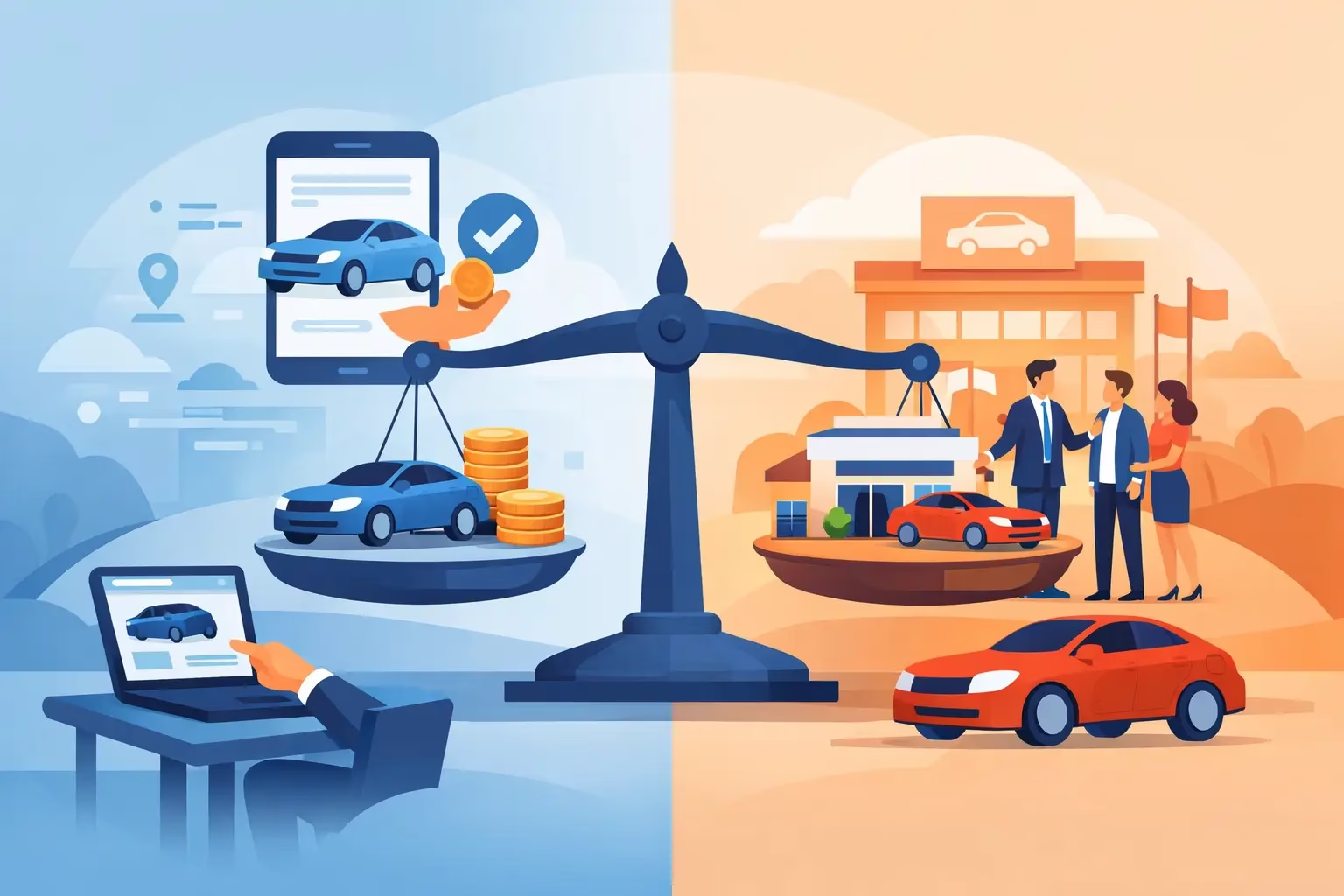
If you need to sell your car this week, the choice between an online car buyer vs dealership gets real fast. One option is built for speed and convenience. The other can work well in the right situation, but it often comes with negotiation, waiting, and more moving parts than most sellers want.
For a lot of vehicle owners, this is not really about squeezing out every last dollar. It is about getting a strong offer, avoiding the usual hassle, and finishing the sale without turning it into a part-time job. That is where the differences matter.
Online car buyer vs dealership: the basic difference
A dealership usually wants your car as part of another sale. In many cases, the trade-in is tied to buying your next vehicle from that same lot. That can be convenient if you are replacing your car right away, but it also means your old car’s value may get wrapped into a bigger negotiation.
An online car buyer is focused on buying your vehicle directly. You submit your car details, get an offer, and if you accept, the pickup and payment process moves forward. There is less back-and-forth, less pressure, and usually a lot less time spent sitting in an office waiting for someone to “check with the manager.”
That alone is a big reason many sellers choose the online route. The process is simpler because it is designed around selling a car, not selling you another one.
Which option usually pays more?
This is the first question most people ask, and the honest answer is: it depends. The best choice comes down to your car, your timeline, and how much hassle you are willing to deal with.
A dealership may make sense if your vehicle is in high demand on that lot, especially if you are trading it toward another purchase. Some buyers also like the potential tax benefit that can come with a trade-in, depending on the state.
But dealerships are also known for conservative trade-in numbers. They need room for reconditioning, resale margin, and negotiation. If they know you are focused on your next car payment more than your current car’s value, the trade-in offer may not be as competitive as you hoped.
An online car buyer can often be more competitive because the process is built to source vehicles directly and efficiently. When a company has access to a large network of buyers and dealers, it can create stronger offers than a single local dealership working from its own inventory needs. That is especially helpful if your car is clean, popular, or in a category that has broad demand.
So, does an online car buyer always pay more? Not always. But if you want a real shot at a strong offer without spending days negotiating, it is often the smarter first move.
Speed matters more than most sellers expect
A lot of people think they have time to shop around, visit dealers, and compare offers in person. Then real life shows up. Work gets busy. The replacement car is arriving soon. Insurance is overlapping. The registration renewal is coming up. Suddenly, speed is not just nice to have.
This is where online buyers stand out.
Instead of driving from dealership to dealership, you can usually submit your vehicle information online in minutes. If the offer works for you, the next steps are clear. No waiting for a sales desk to free up. No long appraisal line on a Saturday. No pressure to stay and shop inventory when all you wanted was to sell your car.
A dealership can absolutely buy your vehicle the same day in some cases. But same-day does not always mean simple. You may still need an in-person appraisal, title review, payoff verification, and a round of negotiation that drags longer than expected.
For sellers who want quick certainty, online car buying is hard to beat.
Convenience is not a small thing
People often underestimate how annoying the traditional selling process can be until they are in it.
With a dealership, you usually need to make time to drive over, wait for an appraisal, respond to a low opening number, and decide whether the offer is good enough before heading somewhere else for another comparison. Even if the process is smooth, it still takes time out of your day.
With an online car buyer, the process is usually remote from the start. You provide the vehicle details, review the offer, and move ahead if it fits your goals. For busy families, working professionals, and anyone juggling a packed schedule, that convenience is not a luxury. It is the whole point.
And there is another part of convenience people care about a lot once a car sale gets complicated: paperwork. If there is a loan payoff involved, that can slow everything down if the buyer is not set up to handle it well. The stronger online car-buying services handle liens and loans as part of the process, which removes a major source of stress.
Pressure and negotiation: a big reason sellers switch
A dealership is built around negotiation. That is not automatically bad, but it is not for everyone.
Some sellers are comfortable going back and forth on numbers. Many are not. They do not want to guess whether the first offer is real, whether the trade-in number is being offset somewhere else, or whether walking away is the only way to get a better deal.
Online car buyers appeal to people who want a cleaner transaction. The offer is based on the vehicle information you provide and the buyer’s market demand. There is still a need for accurate details and condition verification, of course, but the experience is usually much more direct.
That matters if you are selling because of a move, a lifestyle change, a growing family, or a car you simply do not need anymore. In those situations, most people are not looking for a negotiation challenge. They are looking for a fast, fair exit.
When a dealership might be the better fit
There are cases where a dealership still makes sense.
If you are already buying another vehicle today and want everything handled in one place, a trade-in can be convenient. If your state offers a meaningful tax advantage on trade-ins, that can shift the math. And if a dealer is actively looking for your exact type of vehicle, the offer may be stronger than expected.
A dealership may also feel more familiar to some sellers, especially if they have used the same local store before and had a good experience.
But even in those cases, it helps to know your other option first. Getting an online offer gives you a benchmark. It tells you whether the dealership number is competitive or whether convenience is being used as an excuse for a lower payout.
When an online car buyer is the better fit
If your priority is speed, simplicity, and certainty, an online car buyer is usually the better match.
It is a strong option if you do not want strangers coming to your house, do not want to post classifieds, and do not want to spend your weekend visiting multiple dealers. It is also a smart choice if your car has a loan balance, because the right buyer can handle that process without turning it into a paperwork headache.
This is why services like Consumer Auto Xchange resonate with so many sellers. The value is straightforward: submit your details, get a cash offer, and get paid before pickup. That kind of process removes the usual friction and gives people what they actually want – a fast, safe, predictable sale.
How to decide without overthinking it
The easiest way to compare online car buyer vs dealership is to focus on three things: your time, your tolerance for negotiation, and your need for certainty.
If you have time to spare, enjoy shopping offers in person, and are already replacing your vehicle at a dealer, a trade-in may work fine. If you want a fast sale with less effort and less pressure, an online buyer usually wins.
Price matters, but so does the path to getting paid. A slightly higher number is not always the better deal if it costs you hours of running around, delays your timeline, or creates more financial stress while you wait.
The best sale is not just about what looks good on paper. It is the one that gets your car sold quickly, pays you fairly, and lets you move on without the usual headache.
Before you hand over your keys anywhere, make sure the offer fits your life as much as your vehicle. That is where the real value shows up.

