
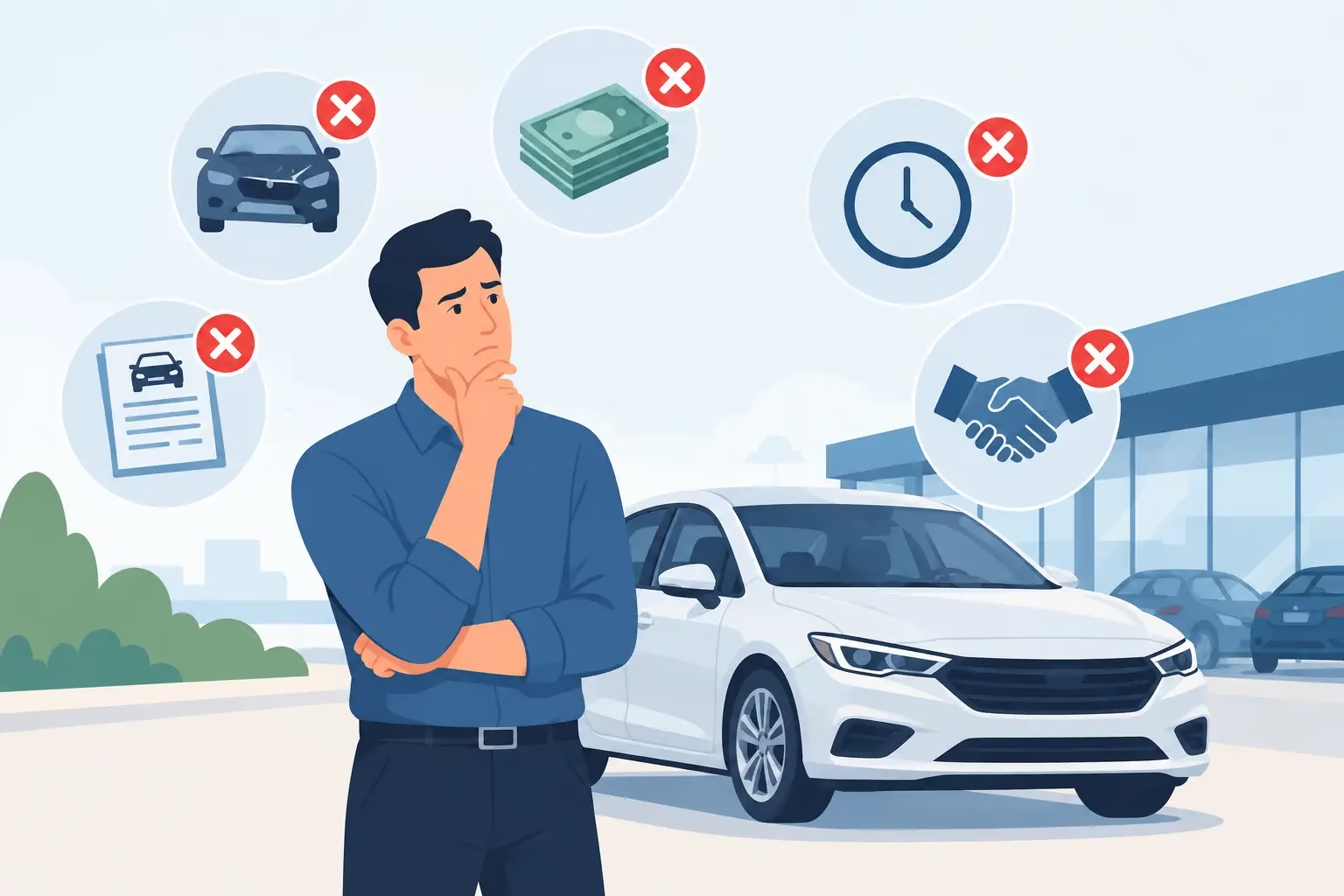
A car that needs to be sold can become a second full-time job fast. You post photos, answer messages, coordinate meetups, negotiate price, and hope the buyer actually shows up. The top car selling mistakes usually happen when sellers underestimate that workload or focus only on the highest possible asking price. A smoother sale starts with knowing where time, money, and peace of mind can slip away.
Top Car Selling Mistakes to Avoid
Pricing from emotion instead of the market
Your vehicle may have been reliable, well maintained, and full of family memories. Those things matter to you, but they do not always raise its market value. Setting an asking price based on what you paid, what you still owe, or what similar vehicles are listed for can leave your car sitting for weeks.
A listing price is not the same as a selling price. Vehicles advertised online may stay posted because buyers are passing them by. Condition, mileage, trim, accident history, local demand, and the time of year all affect what a car is worth right now.
Pricing too high creates silence. Pricing too low can attract fast responses, but it may also mean you gave up money unnecessarily. If you choose a private sale, compare completed sales when possible and leave reasonable room for negotiation. If speed and certainty matter more, a direct cash offer can eliminate the guessing game.
Using weak photos or vague details
Buyers make quick decisions. Dark driveway photos, cluttered interiors, and a one-line description tell serious shoppers that selling your car may be more trouble than it is worth. They also invite messages from people who have not taken the time to understand the vehicle.
Clean the car before photographing it. Take clear pictures in daylight of the front, rear, both sides, wheels, interior, dashboard, cargo area, and any notable features. If there is visible damage, show it and describe it honestly. Surprises at a meetup often turn into lower offers or a buyer walking away.
The same goes for the details. Include the year, make, model, trim, mileage, title status, maintenance highlights, and known issues. Accurate information does not weaken your position. It helps you spend time only with buyers who are genuinely interested.
Hiding condition issues
Trying to gloss over a warning light, worn tires, accident damage, or a mechanical issue is one of the costliest mistakes a seller can make. Most serious buyers will inspect the car, run a vehicle history report, or bring someone who knows what to look for. If the condition does not match the description, trust disappears quickly.
Honesty does not mean turning your listing into a repair manual. State the known facts clearly and price the vehicle accordingly. A buyer may still be interested, especially if the issue is reflected in the price. What they are less likely to accept is discovering a problem after traveling across town to see the car.
Before selling, decide whether a repair is worth making. A basic detail, replacing a burned-out bulb, or addressing a low-cost maintenance item can improve first impressions. Major repairs are different. You may not recover the full cost, particularly on an older or high-mileage vehicle. Sometimes it makes more sense to disclose the condition and choose a buyer prepared to purchase it as-is.
Forgetting the paperwork until the last minute
A serious buyer is ready to complete the transaction. If you cannot find the title, loan information, registration, or payoff details, the sale can stall right when you want it finished.
Gather your documents early. Requirements vary by state, but sellers commonly need a valid title, photo identification, a bill of sale, and a release of liability or notice of transfer. If your title is missing, request a replacement before you advertise the car. Waiting until you have a buyer can turn a quick sale into a long delay.
Keep service records if you have them. They may support your vehicle’s condition and help a buyer feel more comfortable. Just remove or cover personal information before handing anything over.
Ignoring a loan payoff or lien
Owing money on your car does not mean you cannot sell it. It does mean you need a clear plan. The lender technically holds an interest in the vehicle until the loan is paid off, so you cannot simply promise a clean title and hope the details work themselves out later.
Call your lender and request the exact payoff amount and payoff instructions. Ask how the title is released after payment and how long the process takes. If your payoff is higher than the vehicle’s sale price, you will need to cover the difference before the lien can be cleared.
Private buyers may be hesitant to navigate this process, especially when money and title timing are involved. A professional car-buying service can be a practical alternative because it can help handle liens and loan payoffs without putting you in the middle of a complicated transaction.
Spending days with buyers who are not buyers
Private listings often bring a flood of messages, but attention is not the same as a real offer. Some people are collecting information, some want to trade, some want an unrealistic discount, and some never plan to show up. Every back-and-forth takes time away from work, family, and your next vehicle decision.
Set clear boundaries before you list. Decide how you will communicate, where you will meet, and what forms of payment you will accept. Do not hold the vehicle indefinitely for someone who has not provided a deposit, and do not change your plans repeatedly for a person who will not commit to a time.
There is a trade-off here. A private sale may bring a higher price in some cases, but it requires patience and a willingness to manage the process. If you need your car sold quickly, a guaranteed offer can be worth more than a stream of maybes.
Meeting strangers without a safety plan
Selling a car should not require you to invite strangers to your home or hand over your keys without safeguards. Yet this is one of the most overlooked top car selling mistakes, especially for first-time sellers who are focused on getting a deal done.
Meet during daylight hours in a busy public location. Bring another adult when possible, and verify the buyer has a valid driver’s license before any test drive. Go with them on the drive rather than letting them take the vehicle alone. Keep your phone with you and trust your instincts if a conversation or request feels off.
A remote sale can remove much of this concern. Consumer Auto Xchange lets eligible sellers submit vehicle information, receive a cash offer, and get paid before pickup. That means no driveway showings, no test-drive scheduling, and no waiting around for a stranger to arrive.
Accepting payment without verifying it
A promise to pay is not payment. Cash can be counterfeit, checks can bounce, and payment apps can be spoofed. Never sign over the title, hand over the keys, or release the car until funds are verified and available.
If you accept a cashier’s check, verify it directly with the issuing bank before completing the sale. If you meet at a bank, confirm the funds with a teller. Be cautious with screenshots of transfers or emails claiming a payment is pending. Scammers often use urgency to push sellers into releasing a vehicle before the money is real.
The simpler option is a buyer that provides clear payment terms upfront. Certainty matters, particularly when you need the proceeds for another car, a move, or an unexpected expense.
Leaving personal data in the vehicle
Your car can hold more personal information than you realize. Saved home addresses, contacts, garage codes, call history, music accounts, toll tags, and insurance paperwork can all remain behind after a sale.
Before pickup or handoff, remove personal belongings from every compartment, including the glove box, center console, trunk, under-seat storage, and spare-tire area. Delete paired phones and reset the infotainment system to factory settings. Remove toll transponders, parking passes, and any documents that show your address, VIN, or financial details.
Also contact your insurer promptly once the sale is complete. Keep proof of sale and submit any required state paperwork so you are not tied to tickets, tolls, or other issues after the car changes hands.
Waiting for the perfect moment
Many owners keep delaying because they want to wash the car first, wait for the right weekend, or see whether one more buyer will offer more. Sometimes that makes sense. Often, it just extends the stress.
The right selling path depends on your priorities. If maximum price is the only goal and you have plenty of time, a private sale may be worth the extra effort. If you value a fast, straightforward process, choose a route that gives you a real offer, clear payment, and a defined pickup plan. The best next step is the one that gets your car sold on your terms and lets you move forward.

