
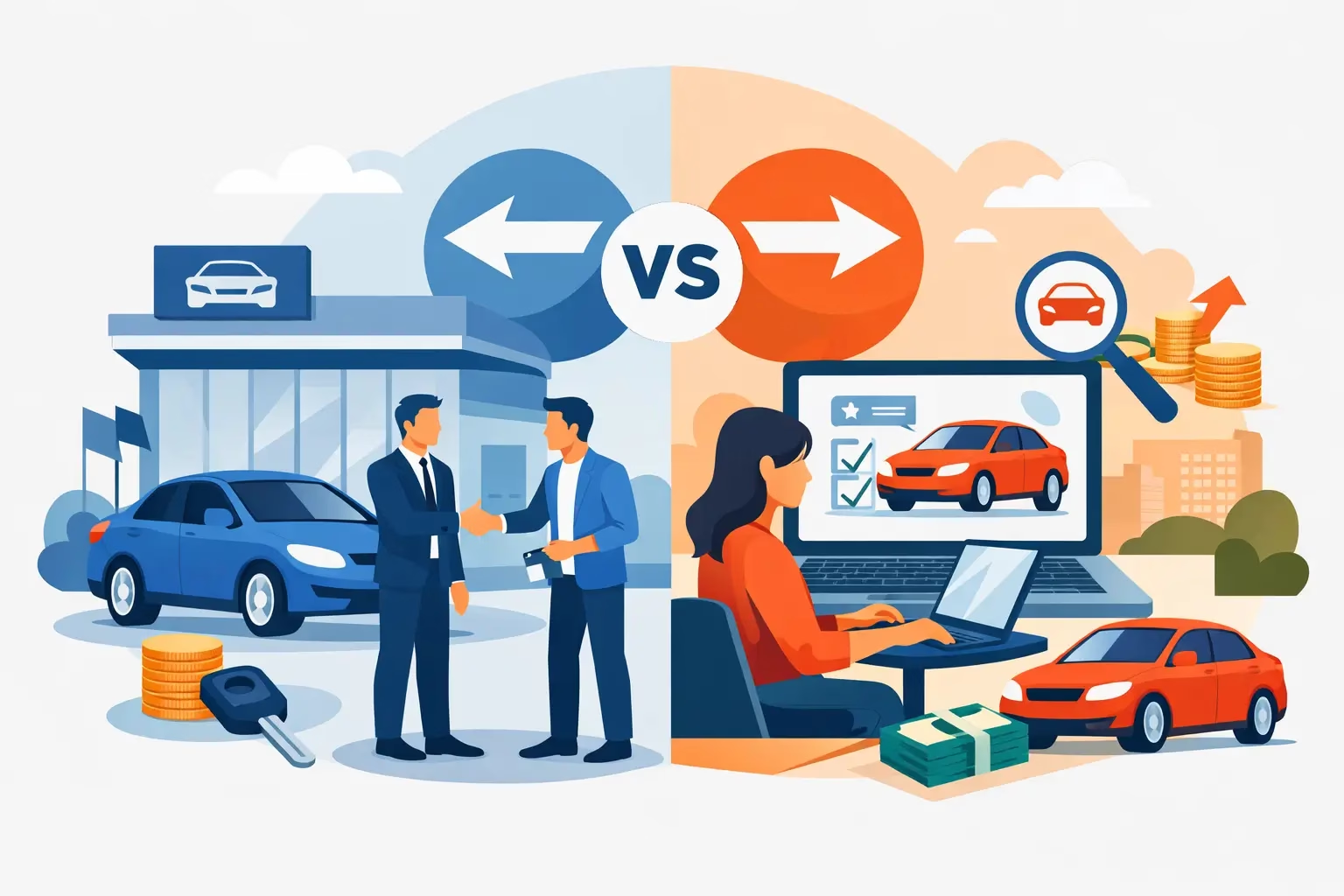
If your current car is sitting in the driveway while you shop for the next one, the real question usually is not whether to sell. It is trade in vs sell car online, and which option gets you the best mix of money, speed, and convenience without turning your week into a headache.
For a lot of drivers, the trade-in route feels easy because it happens at the dealership while you are already there. But easy does not always mean best. Selling your car online can often put more money in your pocket, and it can do that without the stress of private listings, meetups, or back-and-forth negotiating with strangers. The right choice depends on your timeline, your vehicle, and how much effort you want to put in.
Trade in vs sell car online: the biggest difference
A trade-in is built around convenience inside a dealership transaction. You bring in your current vehicle, the dealer inspects it, and they apply a value toward your next purchase. It is one stop, one conversation, and one paperwork flow. That is the main appeal.
Selling your car online is different. Instead of folding your current vehicle into a new-car deal, you sell it directly through an online buyer or vehicle-buying service. You typically submit your car’s details, get an offer, accept it, and arrange pickup or drop-off. In many cases, the process is faster than people expect, especially compared with the old routine of taking calls, posting ads, and waiting for a serious buyer.
The biggest practical difference is leverage. When you trade in, your vehicle value is often just one piece of a much larger negotiation. When you sell online, the transaction is separated from the purchase of your next car. That can make it easier to see exactly what your car is worth.
When trading in makes sense
There are times when a trade-in is the right call. If you need to buy another car today and want the fewest moving parts, trading in can be the simplest path. You hand over one set of keys and leave with another. For some buyers, that simplicity is worth taking a little less.
A trade-in can also work well if your car has major cosmetic issues, mechanical problems, or a very limited resale market. Some dealers may still take it as part of a deal because they have wholesale channels already in place. That does not always mean they will offer top dollar, but it can save you the trouble of sorting out a difficult sale on your own.
There is also a tax angle in some states where the trade-in reduces the taxable amount on your next vehicle purchase. That can narrow the gap between a trade-in offer and a separate sale. It is not universal, and the numbers vary by state, so it is worth checking the local rules before you decide.
Still, the trade-in path has a common downside. Dealers are balancing reconditioning costs, resale risk, and profit margin, and that usually shows up in the offer.
When selling your car online makes more sense
If your goal is getting a strong offer without spending your weekends on showings and text messages, selling online is often the better fit. It gives you a cleaner transaction and usually a better chance at more value than a dealership trade-in.
That is especially true if your car is in solid condition, has reasonable mileage, and is still in demand. Online buyers can evaluate the vehicle based on broader market demand, not just the dealership’s need to make the numbers work on your replacement car.
It is also a strong option if you are not buying another vehicle right away. Maybe you are downsizing to one family car, working from home, or waiting for rates and inventory to improve. In those cases, there is no real benefit to wrapping your old car into a dealer transaction.
For busy sellers, this is where online selling stands out. A streamlined service can remove the usual friction. You share your vehicle details, receive an offer, and get paid without the endless follow-ups that come with private-party selling. Consumer Auto Xchange is built around exactly that kind of fast, simple process, including payment before pickup.
Which one usually pays more?
In a straight comparison, selling your car online often pays more than trading it in. That is because a trade-in offer is usually conservative by design. The dealer needs room for repairs, resale costs, and margin. They may also use the trade-in value to influence the broader deal structure on the car you are buying.
An online sale can create a stronger offer because the buyer is focused on acquiring your vehicle directly, and some platforms can tap into a wide dealer network to generate competitive pricing. That broader reach matters. A car that is just average to one local dealer may be a great fit for another buyer in a different market.
That said, not every online offer beats every trade-in offer. Older cars with heavy wear, salvage history, or unusual issues can be harder to price aggressively. This is one of those situations where it depends on the vehicle. The smart move is to compare actual offers, not assumptions.
Time, effort, and stress matter too
A lot of people focus only on price, but that misses the full picture. If selling your car takes three weeks, ten conversations, two no-shows, and one sketchy payment attempt, a slightly higher price stops feeling like a win.
That is why the best trade in vs sell car online decision is not always about the top number on paper. It is about the total cost in time, effort, and certainty.
Trading in is simple, but often less rewarding financially. Private-party selling may bring the highest number, but it usually demands the most work and carries the most risk. Selling online sits in the middle in the best way possible. You can often get more than a trade-in while avoiding the hassle and safety concerns of meeting unknown buyers.
For working parents, commuters, and anyone juggling a packed schedule, that middle ground is often the sweet spot.
What to watch for before you decide
Not all offers are created equal, and not all selling methods are equally smooth. Before you choose, look at the details behind the headline number.
Ask whether the offer is firm or subject to change after inspection. Find out how fast you get paid. Check whether lien payoff support is available if you still owe money on the vehicle. And make sure you understand who handles pickup, title steps, and final paperwork.
These details matter because they affect the real experience. A high number can lose its shine if payment is delayed or the process drags on for days.
The strongest online car-selling services remove those pain points. They make the offer process quick, explain the next steps clearly, and handle the complicated parts so you do not have to chase them down yourself.
How to choose the right option for your situation
If you need absolute simplicity and are already buying another car at a dealership, a trade-in may be good enough. It is fast, familiar, and easy to wrap into one visit.
If you want a better chance at more money and still want the sale to be easy, selling your car online is usually the smarter move. It gives you more control, more transparency, and less pressure than working your car’s value into a dealer negotiation.
A good rule of thumb is simple. If convenience is your only goal, trade in. If value and convenience both matter, sell online. And if you still have a loan, do not assume that makes selling harder. Many online buyers can help with lien and payoff details, which removes one of the biggest reasons people default to a trade-in.
The best decision is the one that fits your schedule, your comfort level, and your car’s market value. There is no one-size-fits-all answer, but there is a clear pattern. More drivers are choosing online selling because it cuts out the delays, pressure, and uncertainty that used to come with getting rid of a car.
If you are weighing trade in vs sell car online, start with the option that gives you a clear offer, a clear timeline, and a clear path to getting paid. That kind of certainty is hard to beat when you are ready to move on from your car.

